
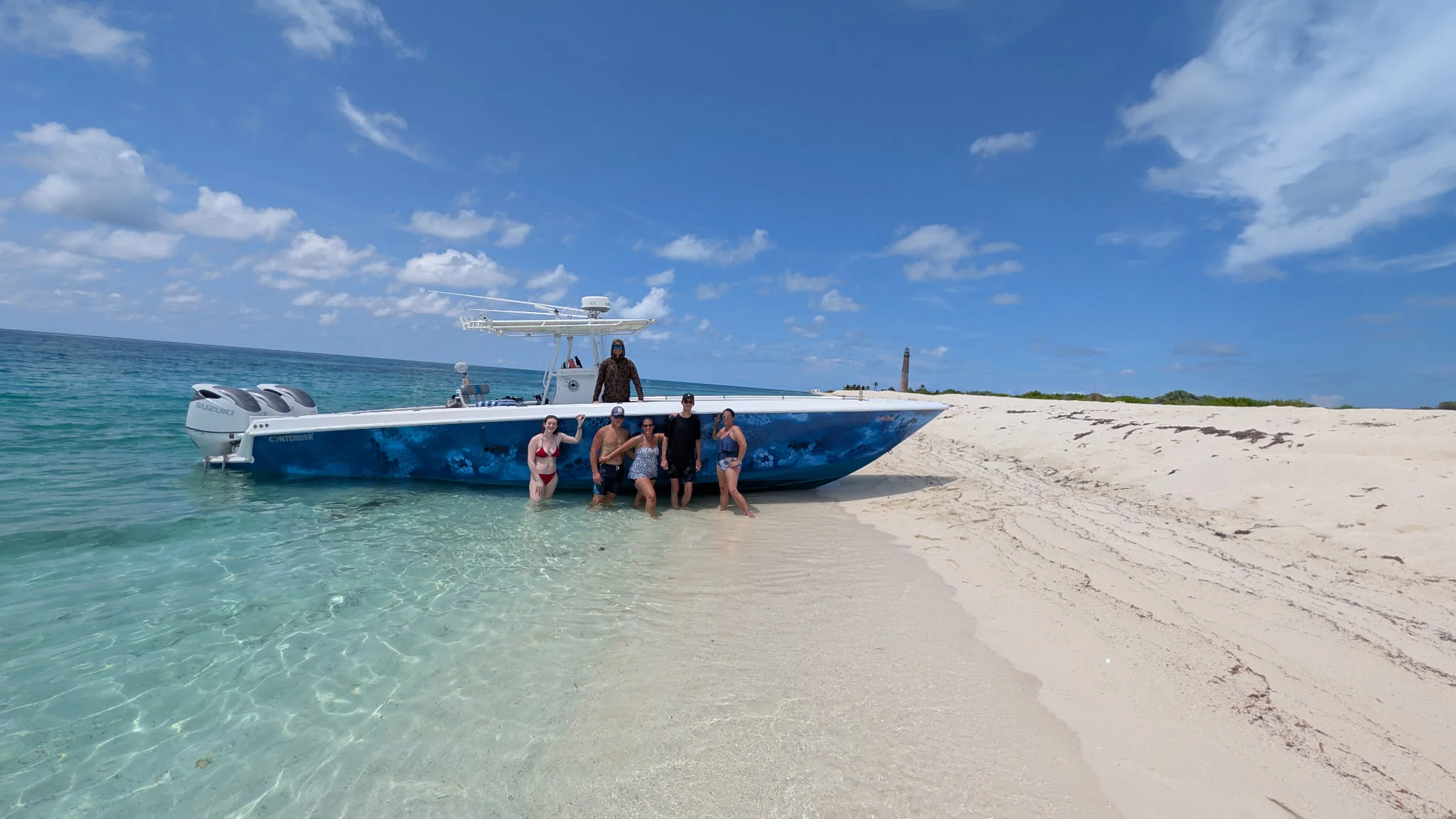
Loggerhead Key is the reason “Dry Tortugas” can mean more than Fort Jefferson.
Loggerhead Key is the largest of the park's seven islands and sits about three miles from Garden Key. NPS says there is no public transportation to the island. Access is limited to private vessel or paddling craft brought to the park.
Why a private boat changes the experience
Ferry and seaplane visitors arrive at Garden Key. There is no scheduled public transportation from Garden Key to Loggerhead Key, so visitors who want the possibility of exploring beyond Fort Jefferson should compare private-vessel options.
The largest island in the Dry Tortugas
Loggerhead Key covers roughly 49 acres and is the largest island in the park. It sits about three miles from Garden Key, but there is no scheduled public transportation between the two islands. That separation is part of what makes Loggerhead feel very different from the Fort Jefferson experience.
The Loggerhead Lighthouse
The Dry Tortugas Light on Loggerhead Key was built in the 1850s and first illuminated in 1858. It was taller and more powerful than the earlier Garden Key light and helped vessels navigate the dangerous reefs and shipping routes surrounding the Dry Tortugas. The lighthouse remains one of the island's defining landmarks.
A century-old center for marine science
Loggerhead Key also played an important role in early tropical marine research. The Carnegie Institution established the Tortugas Marine Biological Laboratory on the northern end of the island in 1904. Scientists used the remote setting to study marine life, plants and the surrounding ecosystem for decades.
The Loggerhead light begins guiding ships through the surrounding reefs.
The Tortugas Marine Biological Laboratory is established on Loggerhead Key.
The light becomes fully automated and permanent Coast Guard staffing ends.
Visitors can explore marked areas, beaches and nearby water by private vessel or approved paddle craft.
What is on Loggerhead Key?
The island includes the historic lighthouse area, beaches, wildlife habitat and the remains associated with the Carnegie research era. NPS also points visitors to nearby swimming and snorkeling opportunities, including Little Africa and the Windjammer wreck area.
Can every private charter stop there?
No page should promise a Loggerhead stop as automatic. Weather, sea state, park closures, protected-area rules, mooring availability and captain judgment all matter. The right copy is “possible access” or “more flexibility to explore,” not a guaranteed itinerary.
Day use only
NPS currently lists Loggerhead Key as open for day use only and requires visitors to stay on marked paths. Buildings and docks are closed to the public.
Boating rules matter
The island lies within a sensitive marine environment. NPS provides specific Research Natural Area, mooring and anchoring rules. Any visitor coming by private vessel should follow the current park boating guidance rather than relying on an old blog post.