
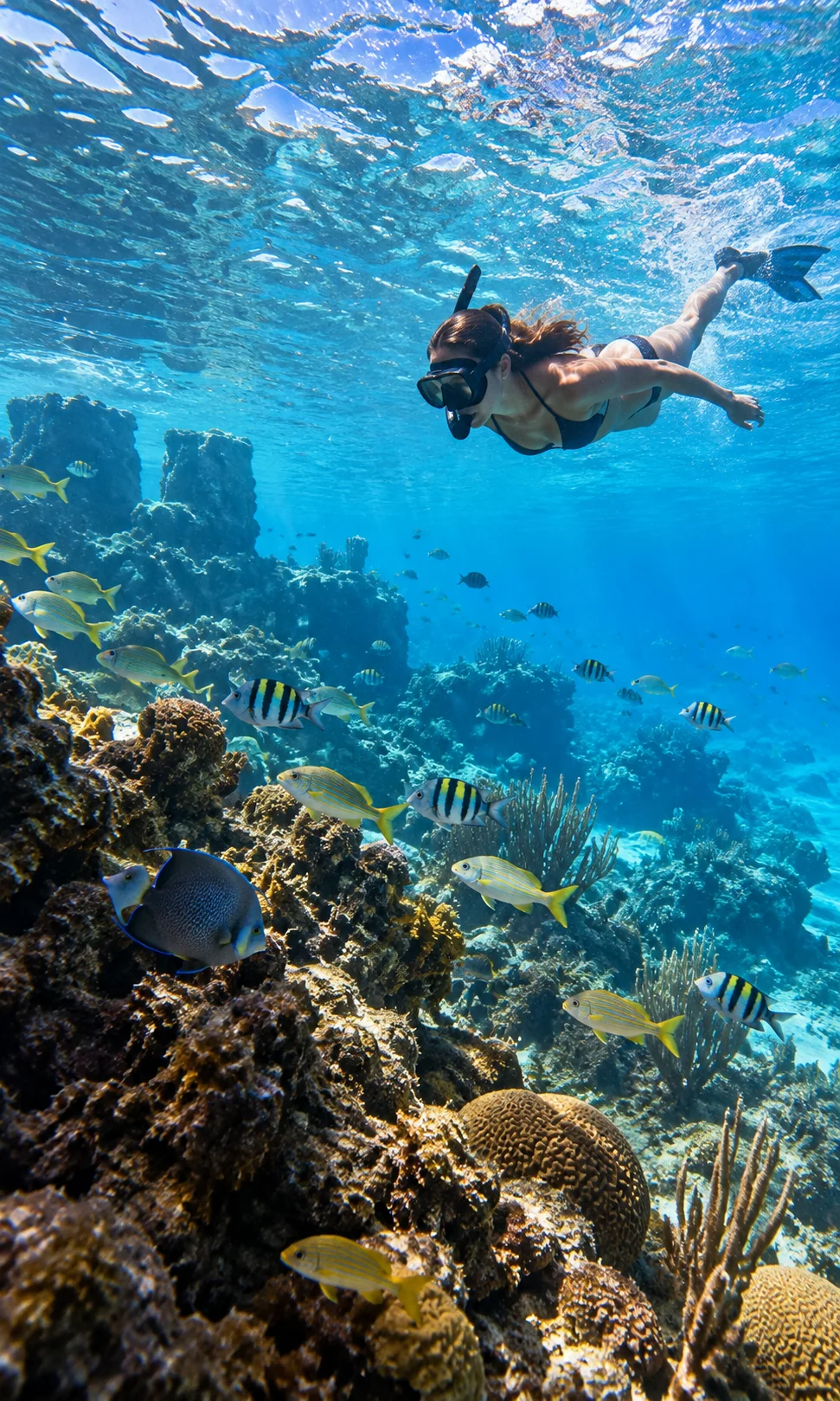
Snorkeling is one of the reasons the destination feels worth the 70-mile trip.
Dry Tortugas sits at the southwest end of the Florida Keys reef system. NPS notes that less than one percent of the park is dry ground, so much of the experience is on or in the water.
Easy-access snorkeling at Garden Key
NPS lists North, South and East Beach as gradual-entry swimming areas that work well for beginner swimmers and snorkelers. The moat wall is another area visitors commonly associate with Garden Key snorkeling.
Loggerhead Key swimming area
NPS describes the designated swimming area on the northwest side of Loggerhead Key as protected, shallow and calm, and notes the nearby coral formation known as Little Africa. Reaching Loggerhead itself requires private-vessel or appropriate paddling access.
NPS says swim at your own risk and keep children closely supervised.
Do not stand on coral or seagrass, and avoid damaging the reef.
Conditions can change. Stay within your swimming ability.
Private-charter inclusions vary, so check whether masks, fins and snorkels are supplied.
Why private charters change the snorkeling conversation
The advantage is flexibility rather than a promise of “better snorkeling.” A private vessel can potentially reach different legal snorkeling areas based on the day's conditions, while ferry and seaplane guests remain centered on Garden Key. The best stop depends on weather, sea state, park rules and the planned itinerary.